Posts

Showing posts with the label The Herp Index

The Herp Index: Shedding in Snakes - What’s Normal, What’s Not, and Why It Matters

Image
Every snake owner knows the moment - the dull skin, the cloudy eyes, the sudden attitude. “They’re going into shed.” But what looks like a simple skin peel is actually a tightly regulated biological process that reflects a snake’s health, environment, and care. When shedding goes wrong, it’s rarely just a skin issue.  This article breaks down the science of ecdysis and the ways you can help your snake have a successful shed.  Under the Skin ~ Complete shed of the snake head ~ (credit: BSAVA Manual of Reptiles) Shedding, or ecdysis , is a normal and essential physiological process in snakes. While it may look like a simple act of “sloughing skin,” it is actually a hormonally controlled, multi-stage event involving complex cellular, biochemical, and environmental interactions. When conditions are optimal, shedding occurs smoothly and in one complete piece. When they aren’t, the result is dysecdysis , or abnormal shedding. Understanding ecdysis is important not only for keepers...

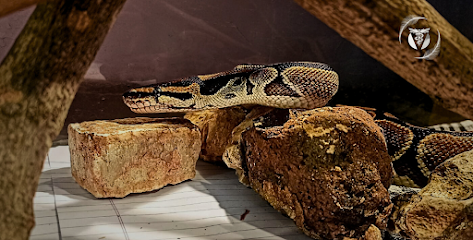
The Herp Index: Why Is My Snake Refusing To Eat?

Image
Few things worry snake keepers more than a pet that suddenly stops eating. This causes owners to panic - Why is my snake not eating? Is  it stressed? Sick? Or just being a picky serpent? As a snake owner, I get this question all the time, and the truth is: snakes refusing food can be perfectly normal—or a red flag that needs attention. The trick is knowing the difference. In this post, we’ll walk through the common reasons snakes go off food, how to separate harmless fasting from health issues, and the practical steps you can take to get them feeding again. Why is My Snake Not Eating? Common Reasons Not all feeding refusals are alarming. Here are the most common causes: ~ Classic visible signs that Google is about to shed ~ Shedding: Appetite often dips a week before shedding. Dull skin and cloudy eyes (“blue eyes”) are tell-tale signs.  Seasonal cycles: Some snakes naturally slow their feeding in cooler months or during brumation. Stress: New e...

The Herp Index: Unveiling the Secrets of Reptile Behavior

Image
Reptiles are often misunderstood. Cold-blooded, slow-moving, and mysterious, they don’t wear their emotions on their sleeves (or scales) like mammals do. But make no mistake—these creatures have a rich behavioural repertoire. If you’ve ever watched a bearded dragon bob its head, a snake flick its tongue, or a turtle bask under a lamp, you’ve witnessed a complex language of instinct and adaptation. In this edition of The Herp Index , we dive into the fascinating world of reptile behaviour—decoding the why behind the wiggle, the stillness, and the sideways glances of our scaly friends. 1. Tongue Flicking: The Snake's Super Sensor  If you've ever held a snake, you’ve likely seen it flick its tongue rapidly in and out. This isn’t a sign of aggression—quite the opposite. Snakes use their tongues to “taste” chemical particles in the air and transfer them to Jacobson's organ (or vomeronasal organ) in the roof of the mouth. Why it matters: Frequent tongue flicking me...

The Herp Index: How Do Pythons Eat?

Image
Constrictor snakes — including boas, pythons, and some species of colubrids — are fascinating predators that employ a specialized method of feeding called  constriction . Unlike venomous snakes that inject toxins into their prey , constrictors use brute strength, anatomical precision, and a carefully orchestrated sequence of behaviours to subdue and consume prey . Their feeding process is a remarkable display of evolutionary adaptation involving sensory detection, muscular control, skeletal flexibility, and biochemical efficiency. Let’s dive into the detailed mechanism of how constrictor snakes eat, step by step, including the underlying biology. 1. Sensing and Locating Prey ~ Difference in location of nostrils and heat pits ~ Constrictors rely on a combination of olfaction , vibration sensing , vision , and, in some species, infrared heat detection to locate prey. Olfaction (smell) : The forked tongue collects scent particles and transfers them to the Jacobson’s organ ...